
Choosing between the Old vs New Tax Regime 2026 has become one of the most important financial decisions for taxpayers in India. Every salaried employee, freelancer, professional, and business owner wants to know which tax regime can help save more income tax legally.
With the latest income tax updates in 2026, many taxpayers are confused about tax slabs, deductions, exemptions, and benefits available under both systems. Selecting the wrong tax regime may increase your tax liability unnecessarily.
In this detailed guide, we will compare the Old vs New Tax Regime 2026, explain tax slabs, deductions, benefits, disadvantages, and help you decide which tax regime is better based on your income and investments.
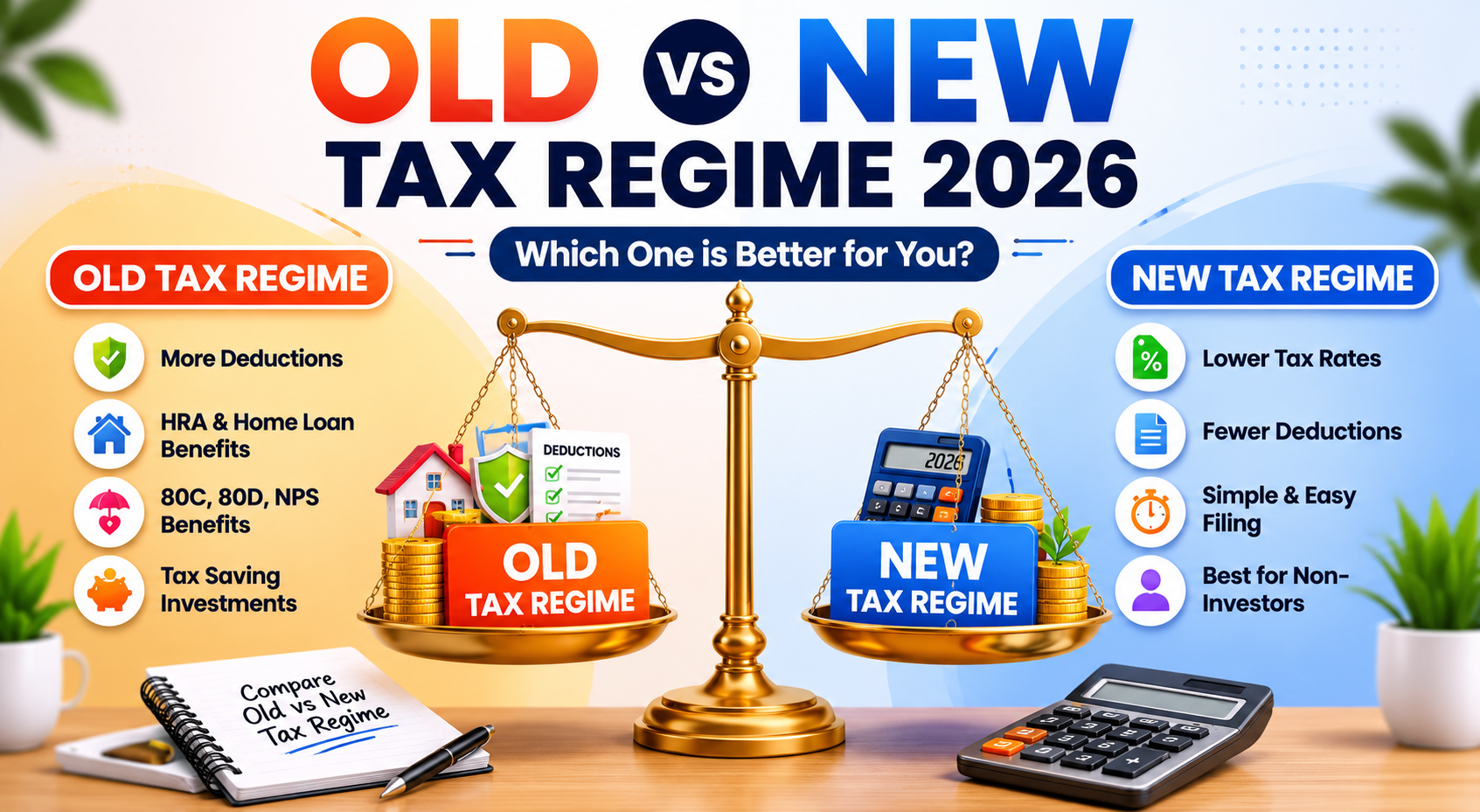
What is the Old Tax Regime?
The Old Tax Regime is the traditional income tax system where taxpayers can claim multiple deductions and exemptions to reduce taxable income.
Under this regime, taxpayers can claim benefits such as:
- Section 80C deductions
- HRA exemption
- Standard deduction
- Home loan benefits
- Medical insurance deduction
- Leave Travel Allowance (LTA)
- NPS deductions
The old regime is suitable for taxpayers who make significant investments and claim tax-saving deductions regularly.
What is the New Tax Regime?
The New Tax Regime was introduced to simplify taxation by offering lower tax rates with fewer deductions and exemptions.
Under this system:
- Tax rates are lower
- Most deductions are not allowed
- Filing becomes simpler
- Documentation requirements are reduced
The new regime is designed for taxpayers who do not invest heavily in tax-saving instruments.
Old vs New Tax Regime 2026 Tax Slabs
Old Tax Regime Slabs
| Income Range | Tax Rate |
|---|---|
| Up to ₹2.5 lakh | Nil |
| ₹2.5 lakh – ₹5 lakh | 5% |
| ₹5 lakh – ₹10 lakh | 20% |
| Above ₹10 lakh | 30% |
New Tax Regime Slabs 2026
| Income Range | Tax Rate |
|---|---|
| Up to ₹3 lakh | Nil |
| ₹3 lakh – ₹6 lakh | 5% |
| ₹6 lakh – ₹9 lakh | 10% |
| ₹9 lakh – ₹12 lakh | 15% |
| ₹12 lakh – ₹15 lakh | 20% |
| Above ₹15 lakh | 30% |
The new regime offers more tax slabs with lower tax percentages for middle-income taxpayers.
Major Deductions Available Under Old Tax Regime
One of the biggest advantages of the old regime is tax-saving deductions.
Popular Deductions Include:
Section 80C
Up to ₹1.5 lakh deduction for:
- PPF
- ELSS
- LIC
- EPF
- Tax-saving FD
Section 80D
Health insurance premium deduction.
Home Loan Benefits
Interest deduction under Section 24.
HRA Exemption
Available for salaried employees living in rented accommodation.
Standard Deduction
Available on salary income.
NPS Benefits
Additional deduction under Section 80CCD(1B).
These deductions can significantly reduce taxable income.
Deductions Not Allowed in New Tax Regime
The new regime removes many traditional tax-saving benefits.
Generally unavailable deductions:
- 80C
- HRA
- LTA
- Home loan benefits
- Most exemptions
However, some standard deductions and selected benefits may still apply under updated government rules.
Which Tax Regime is Better in 2026?
The answer depends entirely on:
- Income level
- Investment habits
- Salary structure
- Tax-saving expenses
- Financial goals
Old Tax Regime is Better If:
You:
- Invest regularly under 80C
- Pay home loan EMI
- Claim HRA
- Purchase health insurance
- Use multiple exemptions
Taxpayers with higher deductions often save more under the old regime.
New Tax Regime is Better If:
You:
- Prefer simple tax filing
- Do not invest heavily
- Have fewer deductions
- Want lower tax rates
- Are young salaried employees
The new regime is simpler and requires less documentation.
Example Comparison: Old vs New Tax Regime
Example 1:
Salary: ₹8 lakh per year
If you claim:
- ₹1.5 lakh under 80C
- ₹25,000 under 80D
- HRA benefits
The Old Tax Regime may provide higher tax savings.
Example 2:
Salary: ₹8 lakh with no investments
If you do not claim deductions, the New Tax Regime may result in lower tax liability.
Benefits of the New Tax Regime
1. Simpler Tax Structure
Less paperwork and fewer calculations.
2. Lower Tax Rates
Useful for non-investors.
3. Easier ITR Filing
Suitable for salaried employees with straightforward income.
4. Better for Young Professionals
Good for individuals not focused on tax-saving investments.
Benefits of the Old Tax Regime
1. Higher Tax Savings Through Deductions
Best for disciplined investors.
2. Encourages Financial Planning
Promotes savings and investments.
3. Useful for Families
Especially beneficial for taxpayers with:
- Home loans
- Insurance
- Children’s education expenses
Common Mistakes Taxpayers Make
Many taxpayers choose tax regimes without proper calculation.
Common mistakes:
- Ignoring deductions
- Not comparing both systems
- Choosing default regime blindly
- Filing incorrect tax details
Before selecting a regime, taxpayers should calculate tax liability under both systems carefully.
Can You Switch Between Tax Regimes?
Yes, salaried employees can usually switch tax regimes while filing ITR each year.
However:
- Business owners may face restrictions
- Frequent switching may not always be allowed for professionals with business income
Tax consultancy is recommended before changing tax regimes.
Important Tax Planning Tips for 2026
Compare Both Regimes Before Filing
Always calculate tax liability under both systems.
Use Online Tax Calculators
Tax calculators help estimate savings accurately.
Maintain Investment Records
Proper documentation avoids compliance issues.
File ITR on Time
Late filing may attract penalties.
Consult Tax Experts
Professional advice helps optimize tax savings legally.
Why Professional Tax Consultancy Matters
Choosing the right tax regime can save thousands of rupees annually. Professional tax consultants help taxpayers:
- Compare tax regimes
- Optimize deductions
- File accurate ITR
- Reduce tax liability
- Avoid notices and penalties
Tax planning is not just about saving money but also ensuring compliance with income tax laws.
Final Thoughts
The debate around Old vs New Tax Regime 2026 depends completely on individual financial situations. There is no single answer suitable for everyone.
The Old Tax Regime is ideal for taxpayers who actively invest and claim deductions, while the New Tax Regime works better for individuals seeking simplified taxation and lower rates without investment commitments.
Before filing Income Tax Returns, taxpayers should compare both systems carefully and choose the regime that provides maximum tax savings based on their income structure and financial goals.
If you are facing refund delays, refund failures, or income tax filing issues, professional income tax consultancy can help resolve problems efficiently and ensure compliance with the latest tax regulations.
Frequently Asked Questions
Which tax regime is better in 2026?
It depends on your deductions, investments, and salary structure.
Can salaried employees switch tax regimes every year?
Yes, most salaried employees can switch while filing ITR.
Is HRA allowed in the new tax regime?
Generally, HRA exemption is not available in the new regime.
Is 80C deduction available in the new tax regime?
Most 80C deductions are not allowed under the new regime.
Which regime gives lower tax rates?
The new tax regime offers lower tax slab rates.