
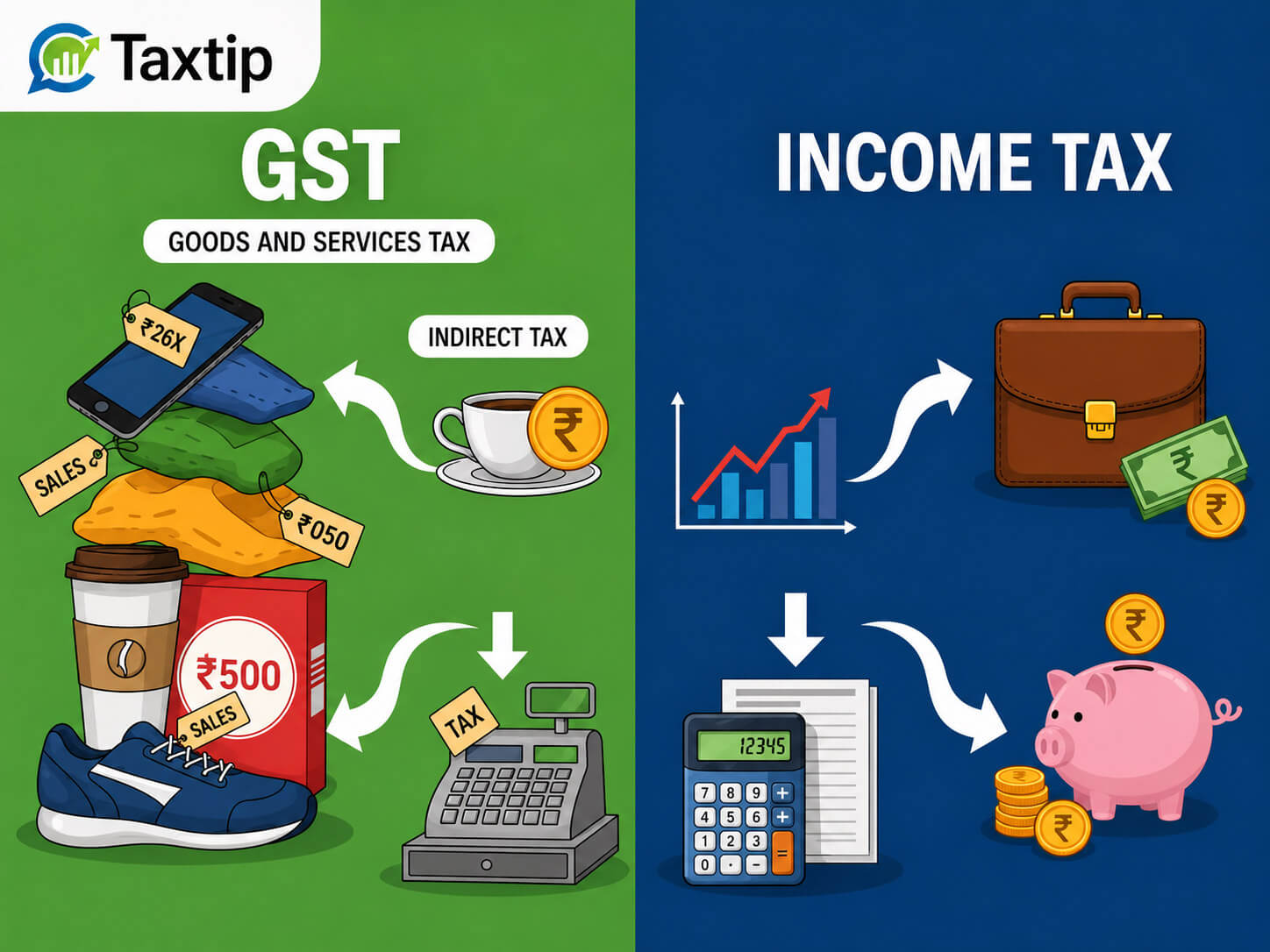
Taxation is one of the most important parts of every country’s financial system, and India has a well-structured taxation framework that helps generate revenue for national development. Among the most commonly discussed taxes in India are GST (Goods and Services Tax) and Income Tax. Although both are government taxes, they are completely different in terms of purpose, calculation, payment process, and applicability.
Many individuals, startups, freelancers, and business owners often get confused between GST and Income Tax. Some people assume both are the same, while others believe paying one tax removes the need to pay the other. In reality, GST and Income Tax serve different purposes and apply under different circumstances.
Understanding the difference between GST and Income Tax is essential for financial planning, legal compliance, and smooth business operations. Whether you are an individual taxpayer, a salaried employee, or a business owner, having proper knowledge of both taxes can help you avoid penalties and manage your finances more effectively.
GST is an indirect tax charged on goods and services, while Income Tax is a direct tax charged on income earned by individuals and businesses.
What is GST?
GST stands for Goods and Services Tax. It is an indirect tax imposed on the supply of goods and services in India. GST was introduced in 2017 to replace multiple indirect taxes such as VAT, service tax, excise duty, and sales tax.
Under the GST system, businesses collect tax from customers and deposit it with the government. GST is ultimately paid by the end consumer, making it an indirect tax.
Types of GST
- CGST – Central Goods and Services Tax
- SGST – State Goods and Services Tax
- IGST – Integrated Goods and Services Tax
- UTGST – Union Territory Goods and Services Tax
Who Pays GST?
GST is paid by consumers while businesses act as tax collectors for the government. Businesses registered under GST must collect tax and file GST returns regularly.
What is Income Tax?
Income Tax is a direct tax imposed by the government on the income earned by individuals, professionals, freelancers, and businesses during a financial year.
Unlike GST, Income Tax is directly paid by the taxpayer to the government based on annual earnings and applicable tax slabs.
Sources of Taxable Income
- Salary Income
- Business Income
- Professional Income
- Rental Income
- Capital Gains
- Interest Income
- Other Sources
Key Differences Between GST and Income Tax
| Basis | GST | Income Tax |
|---|---|---|
| Type of Tax | Indirect Tax | Direct Tax |
| Charged On | Goods & Services | Income Earned |
| Paid By | Consumers | Individuals & Businesses |
| Collected By | Businesses | Government Directly |
| Applicable To | Businesses & Service Providers | Income Earners |
| Tax Rate | Based on Product/Service Category | Based on Income Slab |
| Returns Filed | Monthly/Quarterly | Yearly |
Benefits of GST
1. Simplified Tax Structure
GST replaced multiple indirect taxes with one unified taxation system.
2. Easy Interstate Business
Businesses can now operate across states without dealing with multiple state taxes.
3. Input Tax Credit
Businesses can claim tax credit on purchases and reduce tax burden.
4. Improved Transparency
GST has improved tax transparency and reduced tax evasion.
Benefits of Income Tax
1. Revenue for National Development
Income tax helps the government fund infrastructure, healthcare, education, and defense projects.
2. Financial Discipline
Regular income tax filing encourages proper financial record maintenance.
3. Legal Income Proof
Income tax returns act as proof of income for loans, visas, and financial transactions.
4. Economic Growth
Tax collection supports public welfare schemes and economic development.
Common GST and Income Tax Mistakes
- Late return filing
- Incorrect income declaration
- Wrong GST calculation
- Missing invoices or documents
- Claiming incorrect deductions
- Ignoring tax notices
These mistakes can lead to penalties, notices, and legal complications.
Why Professional Tax Consultancy is Important
Tax laws in India are updated regularly, making compliance difficult for many individuals and businesses. Professional tax consultants help taxpayers understand regulations, file returns accurately, and avoid unnecessary financial risks.
Professional tax consultancy services help with:
- GST registration
- GST return filing
- Income tax filing
- Tax planning
- Notice handling
- Business compliance
- Financial guidance
Experienced consultants ensure accurate calculations, timely filing, and better financial management.
GST and Income Tax are two important parts of India’s taxation system, but they are entirely different in purpose and application. GST is an indirect tax charged on goods and services, while Income Tax is a direct tax charged on income earned by individuals and businesses.